Tuesday, August 9, 2022

M: Original vs. Reissue

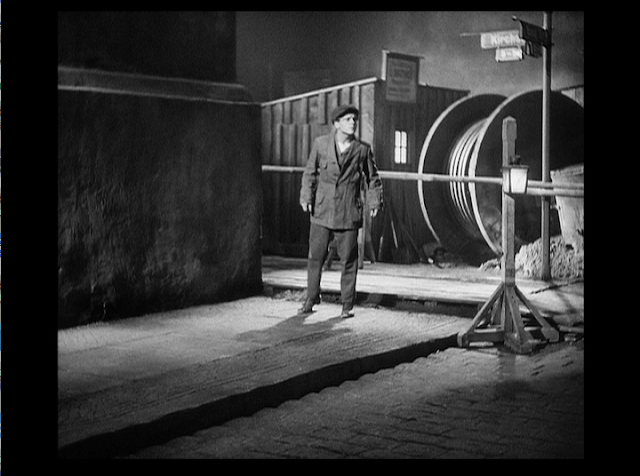
Fritz Lang was a remarkable filmmaker, pushing German expressionism out of the silent film era. Many  know him for creating what is regarded as the first science fiction film ever made, Metropolis. In 1931, when sound cinema in the U.S. generally involved actors walking into a set shot and yelling their lines into a microphone, Lang made one of the first films about a serial killer, entitled M. M broke ground on so many levels. Its political themes of poverty and bankruptcy in post-WWI Berlin, corrupt police, and organized crime watching over the city, combined with moments of complete silence in the film make this a classic in film studies.

When the film was being rereleased in 1960, however, it was a little too ahead of its time for Germany, even 30 years after the fact, and M faced censorship. Scenes mocking the police and government were trimmed or cut altogether. The avant-garde moments of silence on film had sound effects added, and to make the film move at a faster pace, artistic edits were trimmed to only include the most necessary moments in the film for more modern audiences.

This reissue was the most well-known version of the film, and early home video releases, including a laserdisc by Embassy Home Entertainment, used this until the year 2000, when a new restoration was done of the film. Beyond reinserting as much footage as possible, it also brought the film back to its original 1.19:1 aspect ratio and restored the sound to its original presentation, with silence in areas that were initially silent. A note, however, that when the film was originally presented in theaters in 1931, because an optical head would have been passing over the film's soundtrack, there would have been some white noise in the theater, not moments of dead silence that were presented on this 2004 DVD. 

At any rate, because I love comparing versions of films where a comparison doesn't already exist online, here are the differences between the two versions of M. All timecodes refer to the 2004 Criterion DVD. Allegedly a minute more of footage has been found since this release and perhaps these edits can be added in if someone knows what they are. Screenshots also come from the 2004 Criterion DVD,  and are used for educational purposes only-- no copyright infringement is intended. When the reissue features different footage, a screenshot from the Embassy Home Entertainment laserdisc is included.


00:00:00-00:00:50

Reissue opens with an orchestra playing In the Hall of the Mountain King whereas in the original version, the titles are silent. In the reissue version, this music plays over the first few lines of the children playing. The original has a gong sound after the titles before fading into the children.The reissue features more production credits than the original. 

Original Credits


Reissue credits


00:02:02-00:02:21

The woman with the laundry is seen bringing it up the stairs and talking about how heavy it is before ringing the doorbell. The reissue cuts from her yelling at the children to her ringing the doorbell.


00:03:05-00:03:15

We see Elsie's mother scrubbing the laundry before the clock chimes for a longer period in the original version.


00:03:33-00:03:44

The original has footage of Elsie's mother preparing her child's lunch before the shot of Elsie at school.


00:03:55-00:04:02

The original has more footage of Elsie's mother setting her child's place setting at the table.


00:04:59-00:05:06

The original once again shows a longer shot when it cuts back to Elsie's mother preparing lunch than the reissue.


00:07:15-00:07:30

After the clock chimes again, where the reissue cuts to Elsie's mother opening the drapes, the original shows her pacing slowly around the apartment first, worried, then hopefully turning to the window where she hears a man's voice.


00:07:30-00:08:18

Elsie's mother's voice as she repeatedly calls after Elsie uses different vocal takes in the reissue version as remnants objects of her kidnapping and her empty kitchen setting are shown.


00:08:33-00:08:47

After the newspaper man hands the passerby a paper, there is more footage as he walks past and a number of paperboys run into the same frame and sell their papers.


00:09:00-00:09:32

As Hans writes his letter to the police, the original version has a line of the paper man saying "Who is the murderer" is overlapped onto this shot. Also, Peter Lorre's whistling uses a different sound take in the reissue version than in the original.

00:09:32

When the reword poster is shown, the original version has the voice of the paper man saying "10,000 marks' reward."


00:13:50-00:13:59

When the crowd suspects a man being escorted by police as the child murderer, there is more footage of them trying to attack him in the original, but it is unclear if this is intentional or because there was missing footage at the end of the reel in the reissue. In addition, the first shot of the next reel, a publishing of the letter by Hans, is featured for a few more seconds in the original-- perhaps for the same reason.


00:15:13-00:16:15

Inspector Lohmann talking about his investigation is longer in the original version, featuring more detailed work about what the police department is doing to catch the killer, including the use of a forensic document examiner. As he analyzes the signature, we see the first glimpse of Hans' face, as he looks at himself in the mirror.


00:16:35-17:13

The footage of the policemen sleeping on the job at the station is featured for a longer time in the original version, and Inspector Lohmann gives a longer monologue exaggerating about how hard they are working. He also lies about how hard the homicide squad is working, while there is footage of them not doing so.


00:18:56-00:19:15

Inspector Lohmann gives more excuses as to why the killer hasn't been found, blaming the conflicting eyewitness accounts.


00:19:41-00:19:52

After Inspector Lohmann dismisses the witnesses fighting over what color the girl's hat was, the original version extends this scene to show them angrily leaving the office as Inspector Lohmann asks for the next witness.


00:20:26

As a dog is seen barking when it thinks it found the scent of a killer, the reissue features a sound effect of the barking dog whereas this doesn't exist in the original.


00:20:57-00:22:22

The montage of night shots of the streets features sound effects in the reissue version, whereas the original does not feature these sound effects. The sound comes back in the original for a few more seconds of footage that don't exist in the reissue, of the empty street, before cutting to a woman tipping off the customers at a speakeasy that the police have arrived.


00:24:37-00:25:14

There is footage of an empty tables and a patron hiding under a coat rack and trying to escape as we hear the prostitutes heckle the police in the original version.


00:25:25-00:27:50

As the police interrogate each of the speakeasy customers, the reissue features more sound effects whereas the original uses minimal sound, mainly just the dialogue.


00:27:50-00:28:35

The original version has a longer shot of all of the weapons and stolen items the police have collected from the speakeasy customers. It also shows an officer knocking on the door of the ladies room and escorting a man out.


00:30:39-00:31:07

There is more footage of the thief examining the stolen watches at the table in the original. The audio take of his line about there being more police on the streets than whores comes earlier in the rerelease.


00:32:46-00:33:00

After the leader of the criminals tells the men to close the blinds, the original version shows a criminal creeping to the blinds and closing them.


00:35:39-00:35:57

During the intercutting of the different groups (thieves vs. cops and government officials) discussing how they will find the murderer, the reissue cuts a shot of a government official insisting every citizen and landlord must consent to a property search.


00:37:54-00:38:19

The commissioner asks if the situation with public cooperation is as bad as the government official suggests and another man at the meeting says it is, reiterating that the public cares only about themselves and not the community before it cuts back to the criminals in the apartment (where the reissue picks the scene back up).


00:39:32-00:40:41

The original features a line by a government official insinuating the conditions of the bodies of the children are unspeakable but well known to everyone at the meeting. He also says that murderers of this kind rarely leave clues.


00:42:16-00:42:52

After the criminals decide they need to consult the organization of beggars, a beggar is seen organizing rolled cigarettes and cigars, stealing the largest cigar for himself. The camera pans to a sign reading Mr. Credit is dead and buried-- the management" before the camera pans to the section of the shot where the reissue picks up.


00:42:50-00:45:55

The montage of the organization of beggars has an added sound effect of crowd noise throughout in the reissue version.


00:46:02-00:46:23

When the young girl throws the blind man a coin and walks with to school with her father, the reissue version has an added sound effect of traffic noise whereas the original doesn't pick up this traffic noise until a car horn starts honking as it passes them.


00:50:23-00:50:34

As Hans shops at the fruit cart while his home is being searched, the reissue version features more traffic sound effects than the original.


00:50:57-00:51:32

When the investigator is snooping in Hans' home, there are sound effects of paper crinkling in the reissue as he goes through the waste basket. This is mostly silent in the original, but does feature a longer take of the shot as he pulls out a notebook at takes notes. Again, it is unknown if this is due to a reel change and missing footage, or an intentional edit. The next shot of the sidewalk starts earlier in the original as well.


00:51:35-00:55:38

As Hans looks in the storefront window and notices a girl in the reflection, the reissue features more traffic (mainly car horns) and crowd sound effects than the original. As the mother walks around looking for her mother, there is an added sound effect of footsteps. In addition, the whistling by Hans during this scene is a different take than in the original. As he goes to a restaurant for a drink, the extra sound effects, and the different take of whistling continue in the reissue.


00:58:36-00:59:02

As the man follows Hans and the little girl, eventually hiding across the street from the market where Hans takes the girl, the reissue adds a footstep sound effect that wasn't in the original.


00:59:32

When Hans flips the switchblade to carve a piece of fruit, the reissue adds a sound effect of the blade flipping open.


00:59:49-00:59:56

As the man with the marked M on his hand pretends to trip and marks Hans' jacket before yelling at him for dropping the fruit peel, the reissue adds a footstep sound effect.


01:01:59

The man informing the criminals that Hans has been identified as the killer has an extra line overlapped over the next shot in the original, where he says "His every move is being watched."


01:01:59-01:06:00

As the beggars follow Hans through the city, there are added footstep sound effects and more traffic sound effects throughout the sequence in the reissue.


01:06:29-01:06:43

As the security guard locks the gate of the building where Hans is hiding, the reissue adds a sound effect of him locking it, traffic, and footsteps as the policeman passes.


01:10:30-01:10:43

As the kangaroo court forces their way into the locked building, the reissue adds footstep sound effects.


01:12:29-01:12:54

The shot of the security guard adjusting the alarm is longer in the original version, followed by him getting jumped by one of the trespassers and Hans overhearing it from the other side of the door.


01:16:37-01:16:40
After the man who has spotted Hans runs downstairs, the original features more footage of the man he bumps into inspecting the room he is in and as someone yelling down the stairwell curses.


01:17:25-01:17:29

When Hans is spotted, the original features a longer shot of the group trying different keys to open the door to the room he is hiding in.


01:18:51-01:18:57

The original has a longer shot after the police department finds the card identifying the location of the break-in, revealing a blue print of the location. The next shot is longer as well, featuring one of the trespassers warning everybody to get out.


01:20:00-01:20:46

As the trespassers evacuate the building, the reissue features traffic sound effects whereas the original is dialogue only.


01:20:55

The original features more footage during the shot sequence of the damage by the trespassers after they have left.


01:27:08-01:27:28

The police chief responds to the knock on the door in the original version by saying "Come in!", before finishing his conversation where he says to have a criminal surrounded.


01:28:05-01:28:23

The dialogue placement over the sequence of shots as the police chief reads the report of the break-in is completely different in the two versions. While the order of the dialogue doesn't change, the pauses between the two shots are completely different. In addition, some of the shots stay on screen for a second or two longer in the reissue than in the original, and others stay on screen longer in the original.


01:30:00-01:30:45

After the man is custody is told he's wanted for questioning, the original has him sit up, mock the fact that four men are there to take him in before he is told to move it. He is escorted to the next room, where he looks around before he sees a sign of the plaque of the wall The reissue fades to black after the line that he is wanted for questioning and ades back in as he walks toward the plaque.


01:34:09-01:34:13

When the inspector is asking if the distillery that the man in custody is trying to describe, the voiceover in the original asks if he means the one that went bankrupt. This voiceover is slightly truncated in the reissue to exclude the part about the depression.


01:40:52-01:40:55

After Hans gives his monologue about not being able to help murdering children and a man in the kangaroo court stands and says they've heard that story before, the original version has some more footage in that same shot, where he says before the judge they all "can't help it."


01:48:25

When the mob storms Hans and stops to put their hands up, the reissue adds a line of dialogue off camera of a police officer saying "Police, hands up". This moment is silent in the original.


01:48:35

When the camera cuts back to Hans, the reissue features the musical interlude of "In the Hall of the Mountain King", whereas it is silent in the original.


01:48:48

The reissue follows this shot with a black screen, while "In the Hall of the Mountain King" still plays, and a voiceover has the line "We too should keep a closer watch on our children" followed by the Ende title card, whereas the original shows footage of Hans' proper trial and a woman in the stands as she says this will not bring the children back, followed by the final line, and fading to black with no title card.


Sunday, January 16, 2022

Movie Media Fan's Top Five NYC Movies

Who doesn't love movies about New York? In a city that's been consistently evolving, it's always a pleasure to not just see a snapshot of a period of time in the Great Apple, but get lost into a world of that time period with a filmmaker and/or a film's characters. I was wandering around the city on my birthday recently thinking about how there are so many definitive 'lists' about what is considered the 'best' movies about New York. Scrolling through, all of the movies are so.....academic: Woody Allen's Manhattan. William Friedkin's The French Connection. Billy Wilder's The Apartment

I realized a list of one's favorite NYC films is going to be as personal as one's experience with the city. In a cultural metropolis of that size, no two people are going to have the same experience, right? The same goes for what glimpses of NYC past people choose to celebrate. So, ranked with the best for last, here are my top five films about New York that I'd love to share with you today.

5) Go Go Go, Marie Menken


Experimental filmmaker Marie Menken, who was the basis for the character Martha in Who's Afraid of Virginia Woolf?, made this tiny film on her 8mm camera between 1962-1964. It's rumored that because of her large frame, Menken could hold the camera steady in the palm of her hand as she swept through the city. What's so wonderful about this silent 11 minutes is that it captures quite a few things about New York other films can't. First off, it's silence makes one focus simply on the rich images. The images rush through the camera because of the low frame rate in which it was shot. This gives the viewer that Go Go Go feeling of the city, as Menken takes her audience on a journey through city streets, a theater, and Coney Island to name a few. 

Also, the time period makes this film stand out because it is right on the cusp of when a gritty recession started to permeate the air of the city. Some shots illustrate this as the camera flies through more industrial neighborhoods, while other sections of the film show a more wealthy and post-war America version of the city with images similar to a 1950s Hollywood portrayal. My absolute favorite part of this film is the section shot in Coney Island, which parallels something out of the opening of Douglas Sirk's Imitation of Life

4) Fame, Alan Parker


An ensemble piece about kids at the New York High School of the Performing Arts from 1976-1980, the gritty recessed 70s version of the city of New York plays an important character in this piece. An NYC long gone, we see everything from characters eating cheap hot dogs in a run down Times Square with the old Coke sign, street fights as they exit the subway, the original Rocky Horror Picture Show at the Roxy Theater, and run down elevators leading into luxury apartments. Its portrayal reminds us of what type of city NYC was for a young person during this period, if not through the images than through the dialogue-- several characters in the film talk about going to the performing arts school because of their fear of violence in New York public schools at the time.

3) On the Town, Gene Kelly and Stanley Donen


MGM recycled many storylines in their musical department, and sexually charged servicemen on leave for one day in a big city like New York was one of them. They all stemmed from the 1945 Broadway musical version of On the Town with music by Leonard Bernstein. Ironically, a similar film Anchors Aweigh which takes place in Hollywood was released in 1945, 4 years before this film version of On the Town was released. This film gloriously captures 1940s New York in 3-Strip Technicolor, and while only four of the songs and a sliver of the original script of the Broadway show remain, the film's use of color and cinematography do a great job of making a post-war New York bounce to life and for 97 minutes the audience gets to join the sailors in the excitement of what visiting New York at that time would have been like. True, a lot of the film is shot on a Hollywood soundstage, but a great deal of footage exists in subways and outdoor locations as well. The opening number "New York, New York" is a great example of this.

2) Oliver & Company, George Scribner


How did an animated film about New York make this list?! Truthfully, all of the films on this list are artistic representations of the city, and this example is no more abstract of an example than the experimental film Go, Go, Go that I listed earlier. A 1988 take on Oliver Twist, featuring cats and dogs as the main characters, this movie always makes my heart smile. The animation and color choices bring 1980s New York to life and while it may be an animated movie, whenever I'm walking around midtown or the upper east side of the city, the images of this film always come to mind for me. Whether it's seeing the animated dogs and cats running through a construction site, hanging out in an alley, sitting in the window of a 5th Avenue apartment, or stealing hot dogs from a cart vendor, we as the audience are surrounded by the city as much as any of the other films on this list. I will always remember being in a theater at 4 years old and hearing Billy Joel sing "Why Should I Worry?" and strolling through the city. Watching it again recently, I found myself noticing how even though this was only 8 years after Fame, the New York shown here from 1988 is so different than the New York of 1980-- more wealth, less grit. And the hustle and bustle of the city can still be seen through the minimalist animation used throughout the movie.

1) One Fine Day, Michael Hoffman


My absolute favorite New York movie. It is funny, adorable, flawed, and too cute to care about these flaws. Two successful single parents of young children are forced to cooperate and coparent for the day when the kids miss their field trip and off we go into a day long adventure in Rudy Giuliani's 1996 New York. The zany antics take them all over the city: Central Park, Rockefeller Center, and the Lower East Side just to name a few. A suspension of disbelief needs to be adopted for anyone who knows New York geography, but once this happens, the viewer can sit back and enjoy this homage to a modern New York and fall in love with the characters as they fall in love with each other. Michelle Pfeiffer and George Clooney were at the top of their stardom when this film came out, and while the film was given lukewarm reviews by critics at the time and wasn't the box office hit that 20th Century Fox anticipated, the film is a cult classic today.

Sunday, January 2, 2022

Celebrity Recipe: Sally Field's Summer Cobbler


This month's celebrity recipe comes from the one and only Sally Field. Her Summer Cobbler, which tasted similar to the Cuppa-Cuppa-Cuppa recipe from the play/movie Steel Magnolias. The recipe came from Recipe Goldmine:

Ingredients

  • 1 stick (1/2 cup) butter
  • 3/4 cup flour
  • 1 cup sugar
  • 2 teaspoons baking powder
  • Pinch of kosher or sea salt
  • 3/4 cup milk
  • 2 cups fruit

Instructions

  1. Place stick of butter in 6 x 10-inch baking dish. Put in 350 degree F oven to melt.
  2. Mix remaining ingredients except fruit. Pour into dish with melted butter. Place fruit on top, but do not stir.
  3. Bake until crusty, about 30-35 minutes.

Serves 6-8.

Sunday, December 12, 2021

Cinema Manners

 I hate to bitch, but....can we talk about movie theater etiquette for a few minutes? Let me just start with this. I love going to the movies, and it has very little to do with how a movie looks on a big screen.  Special effects mean nothing to me. I am all about sharing the experience of the movie with a group of other people. I am there to feel the energy of the room when something great happens on the screen...an entire theater sighing when Julie throws Tommy's locket out of the window in Martha Plympton's Valley Girl, having an entire audience cheer when someone scores a goal in The Mighty Ducks, or hearing an audience roar with laughter at Aunt Bethany saying the pledge of allegiance in Christmas Vacation-- those are the moments I live for.

There has to be a certain environment created for this to happen. For starters, you need the people. Multiplexes today have been cut from 200-300 seat theaters to a slim 50-60. A cinema that size creates a much more intimate experience, but it definitely doesn't allow itself to the energy one historically is accustomed to in a theater setting. An anecdote I'll share is the opening weekend of Gary Marshall's Runaway Bride. I saw it at a multiplex in my hometown of Waukesha, WI on a Sunday afternoon, and I remember the theater being PACKED with people. As the Touchstone logo came up and everyone quieted down, someone close to the front sneezed and someone in the back yelled "Bless you!", leading an entire audience of 300 people to break out in laughter. This set the tone for the film, and for the better part of two hours we all united in the gift of laughter and forgot whatever was going on that day. I've revisited that film several times since and always enjoy it, but nothing can match the energy of seeing it with a group of people that opening Sunday afternoon.

When I moved back to Waukesha after living in LA for 10 years, I found all the multiplexes had done away with auditoriums with a larger number of seats and replaced them with recliner seats. There still are the rare independent theaters that might run a blockbuster, but the majority of the theaters were now simply leather pink couches, fewer seats, and a very different experience than what I was used to out in Los Angeles. Some people prefer this! A friend of mine expressed how much they loved the change, replying "People are awful." 

And I get what they mean. People text in movies, they talk, they take pictures of the screen. I have no patience for this. If you are texting in a theater, and you don't stop when I ask the first time, I will have a theater employee throw you out. And if it's a kid movie and you have a child with you, I will wave and smile as you both get thrown out and your child is throwing a temper tantrum because they can't see whether the Paw Patrol gang will make it home. 

A few years ago, a Miyazaki retrospective was released to one of our multiplexes, and I went with a friend to see My Neighbor Totoro. Five minutes into the movie, he starts gabbing to me about his dating life and I did a very polite "shhhhhh", and he very loudly yelled back "You shush!". Fifteen minutes later, after sulking, he pulled out his phone and started texting. I took a breath, very frustrated, and before I had a chance to ask him to put it away, someone behind me did instead and he left the theater for 30 minutes before coming back and watching the rest of the movie with me. As we exited, I tried to clear the air and apologize if my reaction was rude but everyone else there, including myself wanted to see the movie. he responded "Yeah, people here are getting a little bent out of shape over a fucking cartoon, an old one at that..." 

And that response seems to be normal when it comes to repertory screenings of movies. "You can see this at home, why do we have to act like this is a regular movie at a regular theater?" seems to be the attitude, not understanding that people are there because they want to have that theatrical experience of this specific movie and that makes the theatrical experience even more important than if they went to see a new film that was just released. 

Not to say that this kind of behavior improves at a newer movie either. Shortly after moving back to Wisconsin, I took it upon myself to go see On the Basis of Sex. There are days I am at the movies when I find it easier to move than try to address the situation of loud rude people in theaters. That day I switched seats about 4 times. I went from a woman behind me giving her commentary about her thoughts on RBG (the phrase "Yah! That's what my sister Debbie was sayin' about her!" was actually uttered), to a bored boyfriend on a date texting, to a pair of grumbling Republicans behind me who had nothing but disgust for RBG's existence (which of course makes sense that they would pay $10 to go see a movie about her life then). Finally, I moved back to the texter, asked him to please turn off his phone, and finished the film.

But ultimately, doing the Lord's work by myself isn't enough. We need to go back to creating a culture that encourages people to want to be at the movies. One where people would much rather look at what's on the big screen than what's on their phones. And I'm not asking people to shush other people. I haven't always gotten positive responses when doing this and it can be dangerous when you get that toxic person who is purposely texting so they can challenge someone to a physical fight outside the theater when asked to stop (an experience I had at a repertory screening of Jurassic Park). I'm asking the theater to be responsible for creating a better environment.

It starts with removing these damn pink couch recliners and going back to real seats in theaters. The big problem with these couches is it encourages an environment that makes people forget they are in a public space. The nonsense that happens at these theaters now is astonishing and a direct result of expecting to hang out on a couch all evening. By treating theater-goers like they are at home, they lose all self-awareness. It used to be that when one went to a movie theater, one dressed up. I don't mean what one would wear to church or the office, but at least clothes that lent themselves to going out for an evening. Generally, the rule should be if you wouldn't wear it at a restaurant, you wouldn't wear it at the movie theater. This is a dated concept now. Going to a multiplex on a Friday, one is lucky to see other theatergoers wash their faces and comb their hair. Many even show up in pajamas and with blankets. This leads to theatergoers becoming too comfortable, to a point where they're not even there to watch the movie anymore. 

The concessions that coincide with going to the movies have fallen to the waste-side as well. We used to eat popcorn and candy. Coffee, tea, water, and soda were the only options available for beverages. Our multiplexes offer gourmet pizza. In the Midwest, this is code for pizza that smells like feet, and it truly does. It is very nauseating and in the smaller theater our multiplexes have created, the funk permeates quickly and lingers for a long time. This also leads to more conversations about the food than the whispered "Can I have some popcorn?" All of a sudden, people are arguing over whether the toppings were correct, turning on their flashlights to hand out napkins, and making far too much noise when the pizza turns out to be too hot for the roof of their mouths-- all while I'm trying to enjoy an actor in an Oscar-nominated performance.

Alcohol is a huge contributor to this theater problem as well. And I get it, people have been getting bombed before going to the movies since the advent of the motion picture. One of my favorite events in Los Angeles was the annual screening of Auntie Mame, a gay camp classic, sponsored by Absolut Vodka, with funds going to the Outfest Legacy Project. People had free drinks for two hours, went into the movie, and cheered along with it for the full 2+ hours, creating the perfect laugh track. But somehow, this worked because of the environment that the alcohol and the film lent themselves to. We were all still dressed like adults in street clothes, we knew there were 600+ people in the theater with us, and we needed to all be respectful of the other 600+ people there. When you mix alcohol WITH stinky food AND cozy couches AND the permission of blankets in a theater AND smaller theaters where you're not surrounded by that many people, it's no wonder that this leads to a disaster in manners. 

I recently was at a showing of the film Spencer with my husband and my sister. In front of us was a row of women in their 40s and 50s who had decided to make this their 'night out'. Each of them were on what seemed to be their fourth or fifth drink of the evening, and as the movie progressed, it became clear that this wasn't what they were expecting and that they had no interest as a group in watching the movie. There were about 10 other people in the theater besides them, but being a smaller theater, their behavior spilled completely over into everyone's viewing experience. Throughout the film they talked, they took selfies with their phones, they played on their phones, and they showed each other pictures of their dogs and kids. Fortunately for me, I had no idea that the phone activity was that bad. It was the talking that was driving me nuts and it was getting worse. Finally I leaned into the entire row and asked them to stop and the reaction was "Oh, sure." 

Honestly, I was a little more aghast by this reaction than the reaction of the man who wanted to beat me up for asking him to turn his phone off. We've created a culture at the cinema where talking and texting has become such a norm, that when people asked to stop, the reaction is as if you asked them to move their jacket so you wouldn't be sitting on it. They didn't see anything wrong with their behavior. In fact, they probably expected that what they were doing was totally normal for the movies, and the sad part is....this behavior has become normalized.

Saturday, June 22, 2019

A New List of Five Golden Girls Facts You Never Knew, Written by an Expert Homosexual

The Golden Girls are such a staple of a homosexual male's diet, and I can't explain why. I just know that I and many of my other gay friends seem to gravitate toward it. If I'm on vacation and am watching TV to wind down, I always try to find an episode. It's hard to tell one episode from another because they're all pretty similar, but it can still suck a person in for a six episode marathon with no issue. Recently, my partner and I decided to go through the series from beginning to end, an excuse for me to buy them all on DVD, and found some pretty shocking discoveries.
We all know the behind-the-scene stories that we have heard for years and years. Bea hated Betty. Bea carved an exclamation point in the front door to encourage high energy during taping. The house's exterior is actually taped in Brentwood, CA. Bea hated cheesecake and they ate over 100. There was a gay houseboy in the first episode. The pilot for Empty Nest started out on this show. But there are some fascinating things you may NOT have noticed as the show has been in reruns. Here is yet ANOTHER top five Golden Girls facts list for you to add to all those spam sites you've come across.

1) The girls always wear shoes.


via GIPHY

They wear shoes while they're cooking, they wear shoes while they're cleaning, they wear shoes while they're lounging around the house, they even wear shoes while they get ready for bed time. There is a valid reason for this. Studio stage floors are dirty and dangerous, and there is a liability clause in actors' contracts requiring them to wear shoes on the set unless otherwise stated. In fact, for most sitcoms you watch, you'll usually see shoes on the actors. It just looks weird here because, honestly, who wears shoes in the house all the time beyond 17 year old boys? Plus, it's not unusual to see Rue McClanahan and Betty White wearing high heels around the house as well. There have been rumors that Bea Arthur pulled some strings and signed a clause stating she wouldn't sue the studio if she could walk around barefoot, but if you watch, it is very very rare that you see her without shoes on. There are times when the actors are taped from the waist up for the whole scene so the viewer can't see their feet, but in every scene a shot of shoes for each character always peaks out.

2) There is no cheesecake for almost a whole season.


What is this show synonymous with? Cheesecake, of course! That's the general premise of the show: one of the three younger women has a predicament, and it gets resolved as they sit around the kitchen having a dessert of some sort-- often cheesecake. So it comes as a surprise while watching the episodes chronologically that it took 22 episodes before a cheesecake even appears in an episode! In the episode Job Hunting (Season 1, Ep 22), Rose loses her job as a counselor at the grief center because it closes. Now, later in the episode she becomes a waitress at a restaurant, and miraculously becomes a counselor at the same grief center a few episodes later without the restaurant or her job there ever being mentioned again........but I digress. Between being grief counselor the first time and being a waitress, she's down in the dumps and Dorothy helps her fix her resume.

In a bout of insomnia after all this work, changing 5 sentences on a half page resume, the girls decide to go to the kitchen to have some warm milk. They decide cookies have to go with the warm milk to make it palatable, and then this leads to the suggestion of having cheesecake with it (and eventually eating a whole meal). A few episodes later in the season finale, entitled The Way We Met (Season 1, Episode 25), a flashback shows the girls devouring a cheesecake after their first fight as roommates, flashing forward to the present, where Dorothy licks the back of her fork and says "Some things never change...." as if they'd been eating cheesecake this whole first season. Uh, no. 

3) It takes Rose almost TWO seasons to say "Back in St. Olaf".

Another staple of the show: while the girls sit around eating cheesecake on an average episode, working through their problems, Rose will tell a story about her days in the fictional town of St. Olaf, Minnesota, where the antics are similar to those of Hooterville in Green Acres. As the episodes roll on, she starts these stories with the phrase "Back in St. Olaf", but for most of the first two seasons, her stories don't start with this famous catchphrase. No, "Back in St. Olaf" actually prefaced a very sad story the first time it was used, in a touching flashback of the episode A Piece of Cake (Season 2, Episode 25) where Rose speaks to her deceased husband, an empty chair, about her desire to leave Minnesota and move to Florida to get on with her life. Anyone who has seen this episode can tell you that it is one of Betty White's finest moments as an actress, showing off her ability to handle dramatic scenes just as well as comedy. 


4) Sophia doesn't tell the first "Picture it...." story.

Another catchphrase of the show belongs to Sophia. When the three younger women are having a personal issue, and an insomnia dessert binge doesn't solve the problem, nor a St. Olaf story, Sophia steps in with a historic story growing up to put things into perspective. These stories usually are prefaced with a phrase similar to "Picture it: Sicily, 1920" or "Picture it: Brooklyn, 1941", wherein she then goes into detail with the story's events. However, this phrase was actually not originally coined by Sophia. In the episode The Sisters (Season 2, Episode 12), feuding sisters Sophia and Angela have not spoken in years and the girls are trying to get their sides of the story. Angela then introduces the "Picture it" line by detailing the evening of the dance where the sisters had a falling out and never spoke again. In the next scene, Sophia uses the line, and uses it regularly in episodes for the rest of the series. Of course, the more intriguing part of the story than their falling out is why these two women are from Sicily, one of which still lives there, and both have Brooklyn accents without a hint of anything Italian.


5) The time span of Dorothy's and her children's ages makes no sense.


Dorothy and her ex husband Stan-- oh what a pair. They were married for 38 years before he left her for a much younger woman without a proper 'goodbye', and then reappears toward the beginning of the show constantly nagging her for money, support, and with his wish for the two of them to get back together. They have been separated at least two years at the beginning of the show and their divorce has just been finalized. This is all fun, except for a few small details that don't make sense. When the show starts, Dorothy is 55 years old. This means they got married when she was about 14 or 15 years old, depending on the month. 
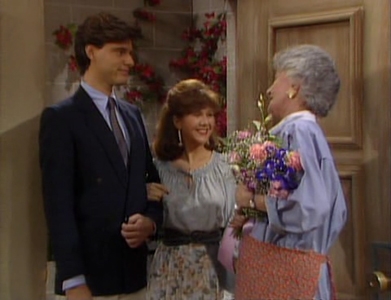
Okay, fine, we'll move on from that as plausible. Maybe the "38 years" did include the two years of separation which could have bumped this to the age of 16 or 17. Plus, after all, Stan did get her pregnant and it was a shotgun wedding. Soooooo, why are her kids Kate and Michael so visibly young? In fact, there are TWO actresses who play Kate that are far too young for the role! In Guess Who's Coming to the Wedding (Season 1, Episode 2), Kate is played by the then 30 year old Lisa Jane Persky:

Image result for golden girls guess who's coming to the wedding

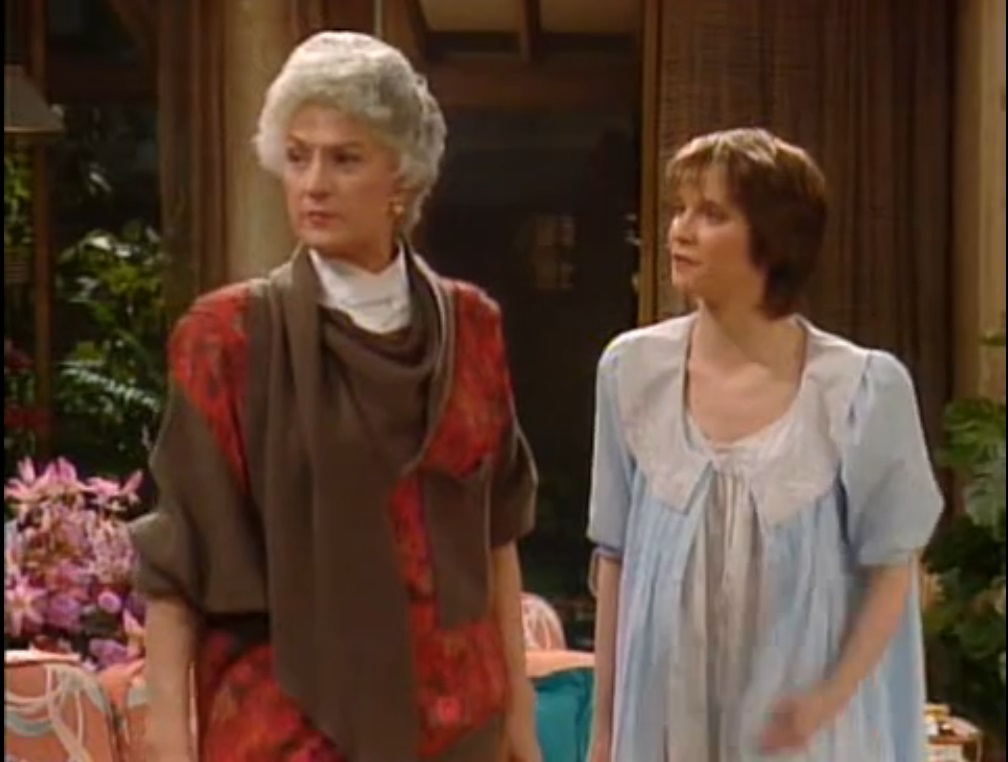
 and in Son-in-Law Dearest (Season 2, Episode 23) by 31 year old Deena Friedman.

Image result for golden girls son in law dearest

Can the people at NBC count?


via GIPHY

Anyway, there you have it-- five new facts about the Golden Girls that were as plain as the nose on your face but maybe never noticed!


via GIPHY