How do you compress a 3 hour film into a 4 hour time slot and make room for commercials? By completely reediting it. The Sound of Music (1965) has an annual telecast every year, starting in 1976 on NBC. The film was pan and scanned for the first time and starting in 1978, chopped by about 35 minutes, before being mastered to videotape and then being run every Christmas. For almost 20 years, this was the version shown annually. Because of the expensive retail videotape (although available for rental) and the film rarely being seen in theaters, this was a version many people were familiar with. The following is a side-by-side comparison with the 1984 Christmas Day broadcast. The timecodes listed on the 20th Century Fox 5-Star DVD release from 2000 (now out of print).
00:09:00-00:09:50: In the scene following the opening titles, as the nuns are singing during mass, the "Allelujah" portion of the song has been cut. The first line can be heard and then fades out as the image cuts to Sister Bernice running to the Reverend Mother.
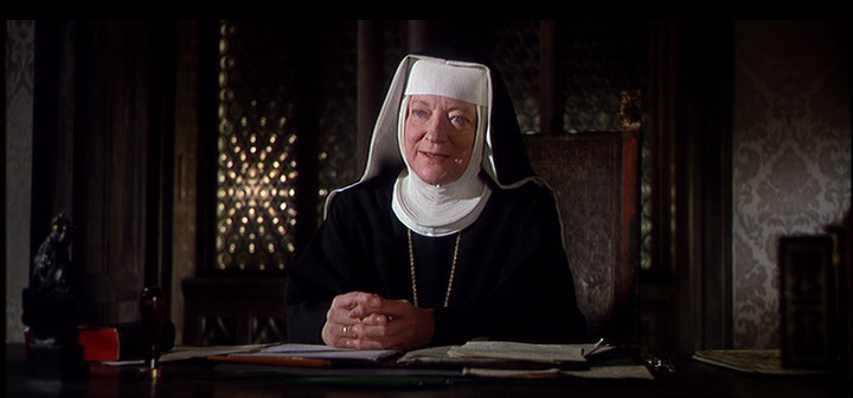
00:14:51-00:15:10: After the song "Maria" but before Maria and the Reverend Mother meet about Maria being sent away from the abbey, footage of Maria waiting in the hall to speak with the Reverend Mother has been deleted, as well as one of the sisters coming out and telling her she can go into her office. The telecast fades to after Maria has entered the office and the Reverend Mother says "Come here my child".
00:15:51-00:16:40: As part of Maria and the Reverend Mother's conversation, after Maria says she was brought to the convent by looking over the convent's garden, a section is cut as she goes into detail about remembering the nuns singing on their way to vespers. She then admits that she has a problem singing all the time and saying everything she thinks and feels. The Rev. Mother consoles her, saying this is a good quality to have. They debate whether or not the convent is the best place for her. The telecast cuts to Rev. Mother telling Maria it is the will of God that she leaves.
00:17:42-00:18:25: Maria asking the Rev. Mother why it's difficult for the captain to keep a governess and her response, as well as the shot of Maria leaving the abbey leading to "I have Confidence" have been cut. The telecast fades from the Rev. Mother to Maria saying "When the Lord closes the door, some way he opens a window."
00:19:36-00:19:59: A portion of "I Have Confidence" has been cut. It goes straight from "Then why am I so scared?" to "I am seeking the courage I lack."
00:22:26-00:23:06: After Maria says "Oh, help!" in "I Have Confidence", the last chorus where she runs through the gate is cut. The telecast fades to commercial and fades back in as she catches her breath after ringing the doorbell.
00:25:27-00:25:38 After the captain asks to inspect Maria as a governess and says "It's the dress..." there is a deletion of dialogue between the two of them about how she had given the rest of her belongings to the poor but they didn't want the dress she was wearing, cutting to "I would have made another dress but there wasn't time."

00:28:42-00:28:57: After the captain introduces the children to Maria with their whistles, a portion is missing when he asks her to repeat them back to see if she's learned them. She states that she won't need to because she wants to learn their names, and he expresses discontent as the grounds are large. It cuts to him giving her the whistle.

00:34:59-00:35:01: During the dinner scene, after Maria covers up for the children playing a prank on them, and Marta begins crying, the section where the captain asks her what is wrong and she says "nothing" has been deleted.

00:36:25-00:37:06: After Liesl asks the captain if she can be excused, the telecast cuts the rest of the scene where the captain says he is going to Vienna and the children scowl in protest, and after inquiring find he is going to visit Baroness Schroeder and bringing her back with Uncle Max, which excites the children.

00:38:04-00:38:41: When Rolfe and Liesl meet in the Gazebo, when Liesl delivers her verbal "telegram" to Rolfe, their discussion about the captain's political stance and how Rolfe is worried about her more than him is cut, going directly from "Dear Rolfe, stop" to "Why, you're such a baby" and into "Sixteen Going on Seventeen".

00:44:33-00:45:04: When Frau Schmidt drops off the material for Maria to make dresses and she shows herself out, dialogue of Maria asking a second time about material for clothes for the children and Frau Schmidt confiding in her that the captain will be gone for a long time and is rumored to marry the baroness has been cut, going from her saying "Goodnight now" to Maria saying "Goodnight".

00:51:55-00:52:11 :After "My Favorite Things", when the captain barges into the room angrily, his interrogation of Liesl going missing after dinner, as well as Maria's fib that they were getting to know each other in her room has been removed, cutting to Maria demanding the children go back to bed.

00:54:48-00:55:21: During the children's tour through Salzburg, the section in the market place where Maria juggles tomatoes, Greta drops one, and Maria stops her from crying is cut.

00:55:57-00:56:17: In the picnic scene, preceeding "Do-Re-Mi", after Brigitta asks Maria if they can have a picnic every day, their exchange about how she might get tired of it and of different pranks they've played on the other governesses has been removed, going directly from Brigitta's question to Maria saying, "Well, we'll have to think about that one."

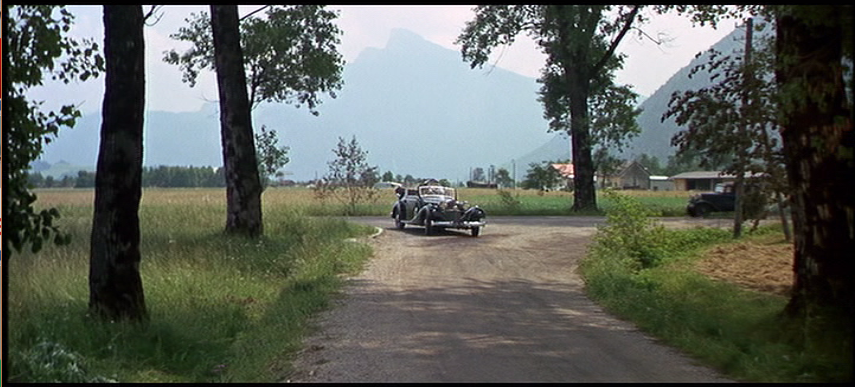
01:02:38-01:02:52: Following "Do-Re-Mi", the extended shot of the car before it cuts to the captain, baroness, and Max discussing the mountains has been removed.

01:02:58-01:03:34: After the baroness tells the captain the mountains are magnificent, the entire conversation about Max inviting himself along as the baroness' chaperone and expressing an interest in being a sponge of the captain's hospitality is deleted, cutting to him intrigued about the music of the Clockman monastery choir.

01:06:54-01:07:03: On the patio, the exchange between the servant and Max where she offers him more strudel and he accepts is deleted, starting the scene with the captain directly saying "Still eating Max?"
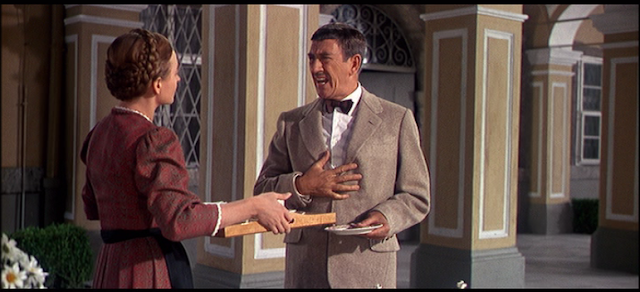
01:08:53-01:09:05: The sequence of Rolfe throwing pebbles at Liesl's window and the captain catching him is shortened, going from the first time he throws a pebble directly to the captain asking "What are you doing there?"

01:16:00-01:16:08: There are three shots of the captain and the children looking at each other after the "Sound of Music" reprise deleted before they embrace.

01:25:15-01:25:51: During "Edelweiss", the section of Liesl singing along with the captain has been removed, cutting to the final coda in the telecast (an awkward sound phasing occurs from the 1" master edit when this happens in the telecast).

01:26:09-01:26:14: The captain and Maria exchanging looks as he shrugs after his performance of "Edelweiss" has been removed.

01:26:20-01:27:01: After Max says the captain can be a part of his new act "The Von Trapp Family Singers", the telecast fades out to commercial, removing the baroness requesting the captain throw a party for her and the children's excitement as Maria takes them to bed, and fades back in at the party.

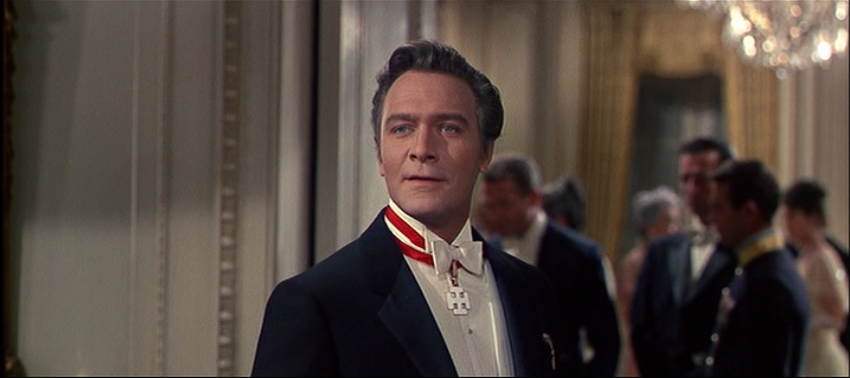
01:27:19-01:27:40: The opening of the party scene has been shortened in the telecast, removing the cars arriving and guests gathering in the main hall.

01:28:22-01:29:03: The children making comments about the couples at the party and Liesl pretending to dance before Frederick asks her to is cut from the telecast-- it goes from the ballroom directly to the two of them dancing together.

01:32:09-01:32:19: After the baroness (catching the captain and Maria dancing) makes a comment about him not being able to find a friend at the party, the captain remarking it's rather chilly and the baroness saying it seems rather warm to her is trimmed before Maria makes an announcement about the children's performance, as well as the opening "Ladies and gentlemen," of her announcement.

01:32:28-01:33:13: The opening of "So Long, Farewell" is cut, opening with the main verse.

01:35:37-01:35:42: A shot of the crowd after the song ends (with the crowd waving) is removed.

01:37:12-01:37:33: After their heated exchange, Herr Dettweiler saying "You flatter me captain," and the captain responding he meant to insult him has been deleted, as well as the opening of the baroness and Maria's conversation, cutting to the baroness asking Maria where a specific outfit is.


01:39:27-01:39:43: More footage of Maria packing after the baroness leaves, as well as the baroness walking through the main hallway is cut from the telecast.


01:40:32-01:40:47: After Max and the baroness discuss how she can influence the captain into having the children sing in his festival, the telecast cuts her walking over to the captain and waltzing with him, going directly to Maria leaving the house with her luggage.

01:41:37-01:43:18: Intermission and Entr'acte are removed from telecast.

01:43:18-01:44:00: The opening of the second act, with the baroness and the children playing their counting ball game is trimmed. While the opening shot of the house is the same, the telecast opens with the audio of Frederick saying "I'm number five," and lasts about 10 seconds before cutting to the actual footage of the scene to match the audio being heard.

01:47:00-01:47:15: After Brigitta asks the captain if it's true Maria is not coming back, the telecast cuts him asking what the drink on the table is and the baroness replying "pink lemonade," and Brigitta pushing the matter about Maria.

01:47:28-01:47:32: The captain claiming he is brave enough to try the lemonade is cut.

01:47:36-01:47:44: The baroness and Max commenting on the lemonade being good but too pink is deleted, as well as Gretl saying "Father?", cutting to her asking who their new governess is going to be.

01:47:46-01:47:50: The shot of the captain, pausing before he answers Gretl, is trimmed.

01:48:47-01:49:06: As the children are one by one kissing the baroness, Kurt's kiss and the captain stopping them and telling them to go away is cut. The telecast also adds the music cue transitioning the two scenes to the children kissing the baroness to make the editing easier.

01:49:42-01:49:50: As the nun greets the children at the gate, she is confused about who Fraulein Maria is, and then as it strikes her who they are asking about she lets them in.

01:49:57-01:50:03: The nun telling them to wait while she speaks to the Rev. Mother is cut.

01:50:34-01:50:46: After another sister, conversing with the children, says Maria is in seclusion, her telling them that she isn't seeing anyone and Frederick and Gretl insisting is cut.

01:51:49-01:52:09: Rev. Mother intaking the new postulant for the convent is cut; the telecast begins with Maria entering the room and the Rev. Mother saying "Yes, bring her in."

01:53:07-01:53:27 : After Maria says "I can't face him again", the Rev. Mother excuses Sister Margaretta before asking if Maria is in love with him.

01:53:39-01:54:16: Maria admitting that she had an attraction to the captain and felt guilt because she was there on God's errand, as well as the Rev. Mother explaining her love for the captain is okay is cut.

01:55:53-01:55:58: As the telecast has to cut back and forth between Maria and the Rev. Mother to get both of their reactions to "Climb Every Mountain", due to the 2.35:1 aspect ratio, the telecast reuses a closeup shot of Maria during this period for continuity purposes.

01:56:28-01:59:40: Following "Climb Every Mountain", the captain questioning the children about where they were and them fibbing and saying they were picking blueberries is cut, fading from the song to Gretl saying "I feel awful".

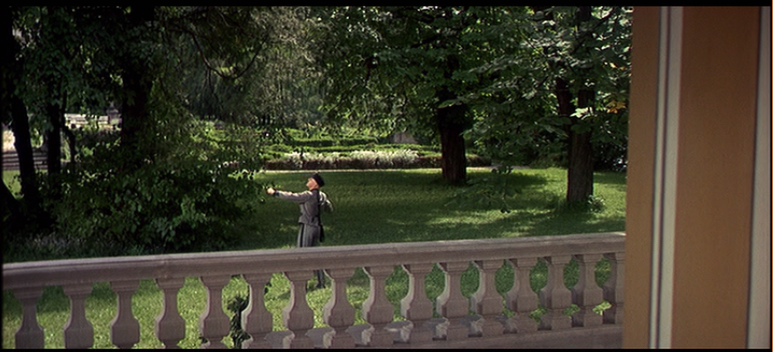
02:03:54-02:04:31: After Maria says she is only staying until arrangements can be made for another governess, the shot of the captain's reaction is trimmed, as well as Maria walking down the steps of the gazebo that same night fading directly to her by the pond.


02:04:47-02:05:40: The baroness joking that the wiener schnitzel is too delicious for her figure, before the captain breaks up with her and her discussing their wedding plans is removed.

02:06:33-02:06:35: When the Baroness says that somewhere out there is a lady that will never be a nun, the telecast uses the deleted footage from before of Maria at the pond instead of the theatrical version's shot.


02:08:40-02:08:43 -When the captain is trying to get Maria to stay and speaks of his separation, the telecast deletes him saying "Maria...." before he says "There isn't going to be any baroness."
02:23:12-02:23:35:After Max brings the children home to greet Maria and the captain after their honeymoon, and the captain expresses frustration about telling Max how he feels about his children singing in public, Max telling the captain that it's for Austria and that the overtaking was peaceful, and the captain should be greatful for this, to which the captain gets angry. has been deleted The telecast comes back in at "You know Max, sometimes I don't think I know you."

02:27:51-02:28:37: After the captain receives his telegram asking to join the German navy, and Maria said she knew it would happen but didn't expect it so soon, the rest of their conversation about needing to leave has been removed, cutting to the evening scene when the family is pushing the car out of the gate.

02:29:58-02:30:10 :As the family push the car out of the house, footage of them pushing it through the front gates and the servant seeing them is cut.

02:32:34-02:33:05: After the family is caught escaping by Herr Zeller, and Maria says their travel clothes are their costumes for the singing festival that night and that the cold air isn't good for the children's voices, Herr Zeller instructing that the family will sing for the sake of Austrian and German relations has been removed, going directly to him saying his men will escort them to the festival.4

02:33:17-02:33:28: When the captain says an escort won't be necessary, Herr Zeller saying he would not want them for them to get lost in the crowds is deleted.

02:46:21-02:48:15 When the children talk about being scared while hiding in the convent, the Rev. mother giving the captain the key to the gate and saying a blessing for him and his family has been cut, as well as Gretl asking if they should sing about their favorite things and Maria responding to be very quiet as they hide. The Nazis entering the graveyard and starting to look for them is also removed, going directly to the Nazis checking the gates for them.


02:48:26-02:48:43: After the Nazis miss the gravestones where Maria and the children are hiding, they do a second check in the theatrical version, missing from the telecast.

02:49:06-02:49:18 Footage of Rolfe waiting for the family on the roof has been trimmed.

What do all these edits mean? A completely different portrayal of characters. The Captain's humor has been heavily excised, even when he is supposed to be 'strict'. His relationship with his children, with his fiancee, and with Max in the theatrical cut give him a more genteel personality. He still smiles, enjoys his children being excited that their Uncle Max will be joining them, and takes pleasure in the baroness' company. His nationalism is also more heavily portrayed. The conversation between Rolfe and Liesl before they sing early in the film removes the tense atmosphere of the Nazis in Austria for the first section of the film, which does not come again until he delivers another telegram after the captain returns from Vienna. More than this, it just wasn't Robert Wise's film. It was a cheap imitation of the original, and only gave viewers a taste of the masterpiece he had created.
I'm sure this irked people who were so familiar with the theatrical version, which hadn't been seen in many years at this point, but it has to be remembered that few people had a VCR when this was first released on home video, and even if they did, the choices were to either rent it or purchase it for $80! There are people from Generation X who also grew up with the telecast edit as their home video version as a result. Today, the film is still run annually on Christmas, but the edits made are different. As newer TV masters were made on other video formats than 1" and widescreen TVs became more prominent, the 1" TV master was retired from broadcast. Its whereabouts are unknown.


 ''
''